How to Train Dogs to Be Gentle with Guests
- 1-Why-Dogs-React-Strongly-to-Guests #Why-Dogs-React-Strongly-to-Guests
- 2-Building-the-Foundation-for-Gentle-Behavior #Building-the-Foundation-for-Gentle-Behavior
- 3-Training-Steps-to-Teach-Polite-Greetings #Training-Steps-to-Teach-Polite-Greetings
- 4-The-Role-of-Environment-and-Routines #The-Role-of-Environment-and-Routines
- 5-Real-Life-Case-From-Overexcited-to-Well-Mannered #Real-Life-Case-From-Overexcited-to-Well-Mannered
- 6-Working-With-Dogs-Who-Are-Fearful-or-Anxious #Working-With-Dogs-Who-Are-Fearful-or-Anxious
- 7-How-to-Maintain-Polite-Behavior-Long-Term #How-to-Maintain-Polite-Behavior-Long-Term
- 8-When-to-Seek-Professional-Guidance #When-to-Seek-Professional-Guidance
1. Why Dogs React Strongly to Guests
Before learning how to train dogs to be gentle with guests, it helps to understand why some dogs react with excitement, barking, or even fear when people enter the home. Dogs are sensitive to change—new scents, new voices, unfamiliar movements—all of this triggers instinctive responses.
Some dogs greet guests with overwhelming enthusiasm because they've learned that visitors mean attention and stimulation. Others may feel unsure or protective, creating reactions that seem aggressive or overly alert. Recognizing the “why” behind your dog's behavior helps shape training that is compassionate and effective.

How a Dog Interprets a Visitor
To a dog, a guest represents something new and unpredictable. Dogs who lack impulse control or confidence may react intensely. This is why training polite behavior starts long before the doorbell rings.

2. Building the Foundation for Gentle Behavior
A dog cannot behave politely with guests if basic manners and emotional regulation are not already in place. Building foundation skills creates stability, making later training far easier.
Teaching Calmness Inside the Home
Dogs learn emotional cues from their environment. A chaotic atmosphere encourages chaotic behavior. Start by creating predictable routines—regular feeding times, scheduled exercise, and consistent quiet periods. These help your dog regulate excitement levels.
Essential Skills to Teach First
• Sit and stay with minimal distraction
• Touch or “focus” commands to redirect attention
• Place training—teaching your dog to settle on a mat or bed
• Loose-leash walking indoors to reinforce calm pacing
These skills give your dog the tools they need when visitors arrive. If you need help choosing behavior tools or calming aids, clinics like Hidden Brook Veterinary often provide product recommendations tailored to your dog’s personality.
3. Training Steps to Teach Polite Greetings
Teaching polite greetings takes time, especially for energetic dogs. But with step-by-step repetition, dogs learn to greet guests calmly and gently.
Step 1: Manage the Initial Excitement
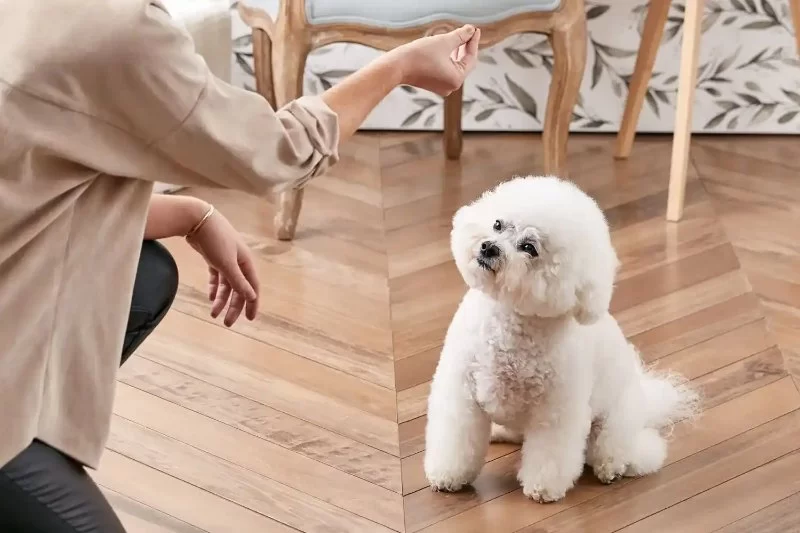
Before opening the door, ask your dog to go to their “place” or sit several feet away. Use calm voice cues and reward when they hold the position. A dog who starts calm is far more likely to stay calm.
Step 2: Controlled Doorbell Training
Record your doorbell or knock sound and play it at low volume while your dog practices staying seated or going to their mat. Gradually increase volume as your dog becomes less reactive. This desensitization reduces adrenaline spikes when real guests arrive.
Step 3: Practice With Familiar “Guests” First
Ask a family member or friend to help. Have them enter slowly while the dog remains on their designated spot. Reward calm behavior. If the dog rushes forward, calmly reset and try again without punishment.
Step 4: Reward Gentle Interactions
Allow your dog to greet only when relaxed—soft eyes, slow tail wag, loose body posture. Teach them to sit before receiving attention from guests. This step prevents jumping, pawing, or barking.
Over time, most dogs form a positive association between calm behavior and enjoyable greetings.
4. The Role of Environment and Routines
Your home environment influences how quickly your dog learns gentle guest behavior. Dogs thrive on structure, and visitors break that structure temporarily. A well-planned system reduces the stress of these moments.
Creating a Calm Space
Provide your dog with a safe zone—such as a cozy bed, crate, or quiet room—where they can retreat if overstimulated. Not every dog wants attention from every guest, and offering choices builds trust.
Exercise Before Guests Arrive
A dog who has burned off energy is less likely to greet guests with overwhelming excitement. A 10–20 minute walk can dramatically improve behavior.
5. Real-Life Case: From Overexcited to Well-Mannered
A family once shared the story of their Golden Retriever, “Sunny,” who would jump on every visitor with pure excitement. Delivery workers, dinner guests, even neighbors walking by—Sunny treated them all as long-lost friends.
The family began practicing place training and doorbell desensitization daily. They asked visitors to ignore Sunny until she sat calmly. Within a month, Sunny went from tackle-hug greetings to polite tail wags and gentle sniffs. Guests now compliment her manners, and Sunny enjoys the extra praise.
Stories like this remind us that even very enthusiastic dogs can learn to greet calmly with the right training approach.
6. Working With Dogs Who Are Fearful or Anxious
Not all dogs are excited by guests—some are scared. Fear-based reactions require a different training approach focused on confidence building.
How to Help a Fearful Dog
• Allow distance and don’t force interactions
• Let guests toss treats instead of reaching toward the dog
• Use gentle exposure to new people in quiet settings
• Build trust with predictable routines and soft cues
If fear escalates to growling or snapping, professional behavior help may be necessary.
7. How to Maintain Polite Behavior Long-Term
Training doesn’t end when your dog learns to greet guests gently—it becomes part of everyday life. Consistency is key.
Reinforce Good Habits
Continue practicing sit, stay, and place commands weekly. Reward your dog for calm greetings in public places too, such as vet offices or parks.
Be Patient During Setbacks
Even well-trained dogs backslide during high-energy events—holidays, parties, or unexpected commotion. Stay consistent, stay calm, and your dog will settle back into the behavior you’ve taught.
8. When to Seek Professional Guidance
There are times when training alone isn’t enough. If your dog shows aggression, severe anxiety, or escalating behavior around guests, professional help is essential. Veterinary teams like those at Hidden Brook Veterinary can guide you toward behavior therapists or recommend calming tools suited for your dog’s needs.
With patience, structure, and the right training techniques, every dog can learn to be gentle and welcoming—even those who start out unsure or overly excited.