- Why Cats Love Climbing Curtains
- Understanding Your Cat’s Behavior
- Why Climbing is Natural for Cats
- Solutions to Stop Your Cat from Climbing Curtains
- Real-Life Stories of Curtain Climbers
Why Cats Love Climbing Curtains
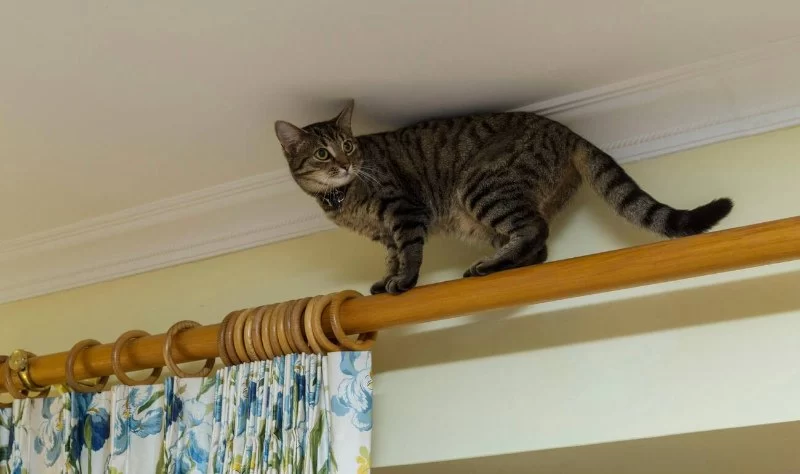
If you’re a cat owner, chances are you’ve walked into a room and found your cat dangling from the curtains or even scaling them like a tiny mountaineer. I remember the first time I caught my own cat scaling the curtains like it was a fun adventure park. It was both amusing and a bit frustrating, but I quickly realized that this behavior is quite common among cats. They seem to be naturally drawn to high places, and curtains, with their flowing fabric, can seem like an irresistible challenge.
As someone who has been a cat owner for many years, I’ve learned that understanding why cats love climbing curtains can help you deal with the behavior in a more practical way. In this article, I’ll explain the reasons behind this natural behavior and provide some practical solutions to help you manage it. And believe me, it’s not all about mischief—there are instinctive reasons for this behavior that every cat owner should understand.

Understanding Your Cat’s Behavior
To understand why cats love climbing curtains, we first need to take a look at their instincts. Cats are natural climbers, and their behavior can be traced back to their wild ancestors. I’ve observed my cat, Leo, who spends hours in high places, watching everything below him. This is no accident—cats have an innate need to be in high vantage points where they can survey their surroundings. This behavior is rooted in their survival instincts.
Cats are territorial animals, and high places offer a sense of safety and control. They feel less vulnerable when they can see everything around them. For domestic cats, climbing serves the same purpose as it would for a wild cat in nature—it gives them a sense of security and helps them assert their dominance in their environment.
Another reason cats climb is due to their natural curiosity. As I’ve observed with my own cats, they love exploring their environment, and curtains can be a great source of entertainment. The texture of the fabric, the movement of the drapes, and the opportunity to hide behind them create a fun and stimulating environment for your cat to explore.
Why Climbing is Natural for Cats
Climbing is an instinctive behavior in cats, and it’s not limited to just curtains. As a cat owner, I’ve seen them climb shelves, furniture, and even trees outside. The desire to climb is deeply rooted in their evolutionary behavior, and there are several reasons for it:
1. Natural Instinct for Hunting
In the wild, cats are hunters, and they use climbing to help them stalk prey. This behavior is preserved in our domestic cats, who may see high places as an opportunity to survey their surroundings for any potential “prey,” even if that just means watching you prepare dinner or keeping an eye on the family dog. The high ground gives them a clearer view of the world, and climbing is a way to engage with that instinct.
2. Territory and Safety
In the wild, cats climb trees or other structures to escape danger and establish their territory. The same instinct drives our domestic cats to seek out high spots. When they climb the curtains, they are not just playing—they’re also seeking safety and asserting control over their environment. This is why you’ll often see your cat perched on top of a tall bookshelf or in a high perch near the window, looking down at the world below.
3. Exercise and Stimulation
Climbing is also a great way for cats to get exercise and mental stimulation. Cats need regular physical activity to maintain their health, and climbing is an excellent form of exercise for them. When I see my cat scaling the curtains, I remind myself that this is an opportunity for him to burn off energy and stay fit. It’s especially important for indoor cats to have plenty of opportunities to climb and move, as it mimics the natural activities they would engage in outdoors.
Solutions to Stop Your Cat from Climbing Curtains
While climbing is natural for cats, it can lead to a lot of frustration for owners when it results in damaged curtains or furniture. I know from experience that it can be difficult to keep your cat away from the curtains, especially when they’ve already developed the habit. However, there are several strategies I’ve found effective in redirecting this behavior and providing my cats with healthier outlets for their climbing instincts.
1. Provide Alternative Climbing Structures
One of the best solutions I’ve found is to offer my cats alternative places to climb. Cat trees, shelves, or even custom-made climbing spaces are perfect alternatives to curtains. When I introduced a tall cat tree in my living room, I noticed my cats started using it more than the curtains. It allowed them to satisfy their climbing instincts without causing any damage. Offering your cat a designated climbing space can help redirect their attention from the curtains to something more appropriate.
2. Use Deterrents
If you’re dealing with a persistent curtain climber, you may want to try using deterrents. I’ve successfully used double-sided tape or pet-safe sprays designed to keep cats away from certain areas. When they try to climb the curtains, the texture or scent of the tape or spray discourages them. This helps break the habit over time. Just be sure to choose products that are safe for your pets and won’t harm their skin or paws.
3. Reward Positive Behavior
Another approach is to reward your cat when they use their designated climbing areas. Positive reinforcement can be highly effective. When I see my cat using his cat tree instead of climbing the curtains, I reward him with treats or extra attention. This encourages him to continue using the tree and avoids reinforcing the unwanted curtain-climbing behavior.
Real-Life Stories of Curtain Climbers
I’ve had my share of curtain climbers, and I know many other cat owners who have faced the same issue. One friend of mine, Susan, had a cat named Bella who would climb the curtains every chance she got. After Bella tore down an entire set of living room curtains, Susan decided to invest in a tall cat tree. It took a few weeks, but eventually, Bella started using the tree instead of the curtains. Now, Susan swears by the cat tree and recommends it to anyone struggling with a similar issue.
Another example comes from my neighbor, Laura, whose cat, Max, loved climbing the curtains so much that he even started to climb her kitchen cabinets. After a few attempts with different deterrents, Laura found success by using a pet-safe citrus spray and placing a scratching post next to the curtains. Max now spends most of his time scratching the post and has stopped climbing the curtains altogether.
If you’re dealing with a cat that loves climbing curtains, I highly recommend trying some of these solutions. And if you ever need advice or help with your pet’s behavior, feel free to visit 【Hidden Brook Veterinary】 for expert recommendations and guidance.