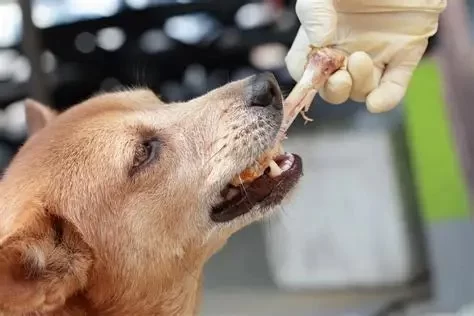
Can Dogs Eat Cooked Bones? Understanding the Real Risks for Your Pet
- why-cooked-bones-are-dangerous-for-dogs - Why Cooked Bones Are Dangerous for Dogs
- what-happens-when-a-dog-eats-cooked-bones - What Happens When a Dog Eats Cooked Bones
- real-cases-and-clinic-stories - Real Cases and Clinic Stories
- why-some-dogs-dont-show-symptoms-right-away - Why Some Dogs Don’t Show Symptoms Right Away
- safer-alternatives-to-cooked-bones - Safer Alternatives to Cooked Bones
- when-to-call-the-vet - When to Call the Vet
1. Why Cooked Bones Are Dangerous for Dogs
Many dog owners still wonder, can dogs eat cooked bones? The short answer is no. Once bones are cooked, they become brittle and prone to splintering. Unlike raw bones, cooked ones can break into sharp shards that act like tiny knives inside your dog’s digestive tract.
These splinters can cause:
- Choking hazards
- Internal bleeding from punctures
- Intestinal blockages
- Mouth and throat injuries
Cooking strips bones of their natural moisture and flexibility. What might seem like a chewy treat could actually turn into an emergency room visit.

2. What Happens When a Dog Eats Cooked Bones
2.1 The Immediate Risks
In some cases, a dog may crunch down and swallow sharp pieces that lodge in the esophagus or stomach. This can lead to vomiting, refusal to eat, drooling, and even blood in stool.
2.2 Delayed Complications
Some injuries from cooked bones don't show symptoms immediately. Internal damage may take hours or even days to present noticeable issues. If left untreated, it can lead to severe infections or life-threatening complications.
3. Real Cases and Clinic Stories
At Hidden Brook Veterinary, we recently treated a Labrador named Max who had stolen a rib bone from the kitchen trash. Within 24 hours, he became lethargic and was straining to defecate. X-rays showed a perforated intestine caused by a bone fragment. Emergency surgery saved Max’s life, but it was a tough lesson for the family.
We hear stories like this more often than you might think. Many of them begin with, “He’s had bones before and was fine.” Unfortunately, it only takes one wrong bite.
4. Why Some Dogs Don’t Show Symptoms Right Away
4.1 Silent Damage
Dogs are masters of hiding discomfort. Even if something is wrong, they may continue to eat and play as usual. That’s why it's important to observe subtle changes in behavior such as pacing, whining, or licking their lips excessively.
4.2 Behavioral Factors
Dogs with high pain tolerance, especially breeds like pit bulls and huskies, may not show symptoms until things get critical. Always err on the side of caution when it comes to ingesting cooked bones.
5. Safer Alternatives to Cooked Bones
5.1 Vet-Approved Chews
Instead of tossing your pup a leftover steak bone, try a vet-approved dental chew or synthetic bone. Products like rubber Kongs or nylon bones offer a satisfying chew without the digestive risk.
5.2 Raw Bones with Supervision
Some raw bones—especially large beef marrow bones—can be safe under supervision. But they come with their own risks and should only be given after consulting your vet. We always recommend checking with your local team, like the experts at Hidden Brook Veterinary.
6. When to Call the Vet
6.1 Immediate Red Flags
If your dog has eaten a cooked bone and starts showing any of the following, contact a veterinarian immediately:
- Vomiting
- Lack of appetite
- Lethargy
- Constipation or straining
- Blood in stool
6.2 Don't Wait and See
Hoping it will pass naturally is risky. Internal injuries can worsen over time, turning a small issue into a life-threatening emergency. When in doubt, call your vet—or reach out to Hidden Brook Veterinary for timely support and compassionate care.