- #why-cat-owners-ask-about-yogurt-with-fruit
- #how-cats-digest-dairy-and-why-it-matters
- #fruit-ingredients-that-can-cause-problems
- #real-life-vet-examples-and-common-mistakes
- #safer-alternatives-and-vet-guided-advice
Why So Many Cat Owners Wonder About Yogurt With Fruit
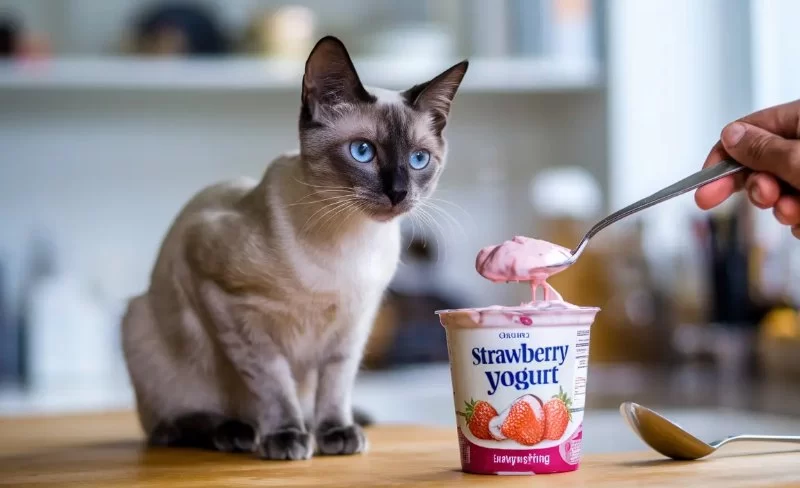
The question “can cats eat yogurt with fruit” comes up frequently because yogurt is often viewed as a healthy, probiotic-rich food for humans. When cats show interest in creamy textures or lick a spoon left on the counter, it is natural for owners to wonder if sharing a small bite is harmless.
Social media has also played a role, with viral videos showing cats curiously sampling yogurt snacks. While these moments look cute, they do not always reflect what is safe for a cat’s digestive system.

Human foods and feline curiosity
Cats are obligate carnivores, which means their nutritional needs are very different from ours. What seems like a gentle, healthy treat for people may affect cats in unexpected ways.
How Cats Handle Yogurt and Other Dairy Products
To understand whether cats can eat yogurt with fruit, it helps to start with dairy itself. Many adult cats are lactose intolerant to some degree. While yogurt contains less lactose than milk due to fermentation, it can still cause digestive upset.
Why yogurt is sometimes tolerated
Some cats can handle plain, unsweetened yogurt in very small amounts without immediate issues. The probiotics may even seem beneficial in certain cases. However, tolerance varies widely between individual cats.
Veterinarians often see owners assume tolerance after one successful taste, only to encounter stomach upset later.
Why Fruit Changes the Safety Equation
When fruit is added to yogurt, the risk level increases. Many fruit yogurts contain added sugars, artificial sweeteners, or flavorings that are not appropriate for cats.
Hidden dangers in fruit yogurt
Some fruits are safe for cats in tiny quantities, while others can cause digestive irritation. Even safe fruits become problematic when mixed with syrups or concentrates. Artificial sweeteners, especially xylitol, are particularly dangerous for pets.
This is why veterinarians generally advise against giving cats yogurt with fruit, even if the cat appears interested or enjoys the taste.
What Veterinarians Commonly See in Practice
Veterinary clinics frequently treat mild but uncomfortable digestive issues linked to shared human foods. A typical example involves a cat developing diarrhea or vomiting hours after being given a small amount of fruit yogurt as a “treat.”
Good intentions, unintended outcomes
Most of these cases come from well-meaning owners who wanted to spoil their pets. Clinics like Hidden Brook Veterinary often emphasize that cats do not need variety in the same way humans do, and treats should always be species-appropriate.
Better Treat Options for Curious Cats
If you are still asking “can cats eat yogurt with fruit,” the safest answer is that it is best avoided. Even when no immediate reaction occurs, the potential risks outweigh the benefits.
Making informed choices for your cat
If an owner wants to explore probiotic support or occasional treats, a veterinarian can recommend cat-specific options designed for feline digestion. These alternatives eliminate guesswork and reduce the chance of accidental harm.
Ultimately, cats thrive on consistency. Treats should support their health, not challenge it. When in doubt, consulting a trusted veterinary professional provides peace of mind and helps ensure that every snack choice supports a long, comfortable life.