- can-cats-eat-sausage-understanding-the-basics
- why-sausage-is-not-ideal-for-cats
- specific-ingredients-in-sausage-that-can-harm-cats
- real-life-case-what-happened-when-a-cat-ate-sausage
- safer-protein-options-for-cats
- recognizing-signs-your-cat-reacted-poorly-to-sausage
- expert-tips-for-feeding-human-food-to-cats
Can Cats Eat Sausage? Understanding the Basics
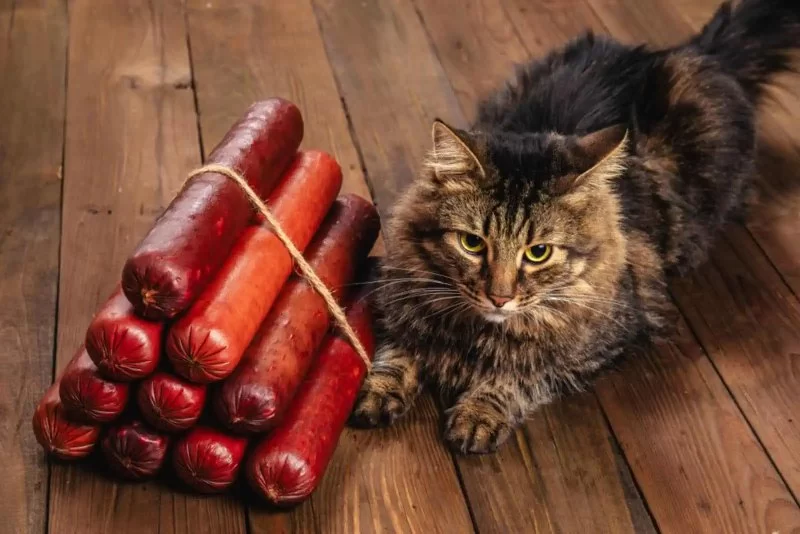
Many cat owners wonder, can cats eat sausage? The question usually comes up when a curious cat wanders into the kitchen, sniffing the air as breakfast cooks on the stove. While sausage smells irresistible—especially to a carnivore—its ingredients and processing methods make it unsuitable for cats in most situations.
Cats are obligate carnivores, meaning they thrive on meat. But not all meats are the same. Sausage, despite being meat-based, is heavily seasoned and often high in sodium, preservatives, and fillers that don’t align with a cat’s nutritional needs. Before offering a piece to your cat, understanding how sausage affects feline health is essential. When in doubt, you can always seek guidance from veterinary professionals at Hidden Brook Veterinary for personalized nutrition advice.

Why Sausage Is Not Ideal for Cats
Even though sausage contains meat, the way it is prepared changes everything. Sausage is a processed product, often smoked, cured, or seasoned. Cats’ digestive systems are not built to handle many of the additives found in sausage.

1. High Salt Content Puts Stress on Cats’ Kidneys
Salt is one of the biggest concerns. Cats naturally consume extremely low amounts of sodium in their diet. Sausage often contains levels far beyond what a cat’s kidneys can safely filter. Over time, excessive sodium contributes to dehydration, kidney strain, and in serious cases, toxicity.
2. Seasonings That Irritate or Harm Cats
Common sausage seasonings like garlic powder, onion powder, paprika, and chili flakes can irritate or even damage a cat’s digestive system. Garlic and onion are especially dangerous as they can cause hemolytic anemia—where red blood cells break down faster than the body can replace them.
3. Saturated Fat Levels Are Too High for Cats
Sausage is often fatty, and cats are sensitive to high-fat human foods. Too much fat can cause vomiting, diarrhea, or even pancreatitis, a painful and potentially life-threatening condition.
Specific Ingredients in Sausage That Can Harm Cats
Reading labels reveals the complexity of sausage. Beyond meat, many brands include nitrates, preservatives, stabilizers, and artificial flavors. While humans can tolerate these additives, cats cannot metabolize them efficiently.
1. Nitrates and Nitrites
These preservatives help sausage stay fresh and maintain color. However, they can reduce oxygen-carrying capacity in cats’ blood when consumed in large amounts. Sensitive pets may show signs of lethargy or weakness shortly after ingestion.
2. Spices and Herbs
Rosemary, sage, pepper, and other aromatic spices can upset a cat’s stomach. Some cats tolerate trace amounts, while others develop inflammation quickly. Because reactions vary, offering sausage becomes a nutritional gamble.
3. Fillers and Unknown Proteins
Many sausages contain fillers like soy, grains, or low-quality meat scraps. These ingredients can trigger allergies or digestive issues, especially in cats with sensitive stomachs or preexisting conditions.
Real-Life Case: What Happened When a Cat Ate Sausage?
One cat owner shared a popular story online about their tabby, Milo, who stole a small piece of breakfast sausage from the counter. Within an hour, Milo began pacing restlessly and later vomited twice. A veterinary visit confirmed that the seasoning and fat content irritated his stomach. Fortunately, Milo recovered quickly after fluids and monitoring—but the experience became a learning moment for the owner.
Cases like Milo’s are common. Even small portions can cause noticeable discomfort. Veterinary professionals at Hidden Brook Veterinary often see digestive upset linked to salty, seasoned human foods like sausage.
Safer Protein Options for Cats
If you want to treat your cat to something meaty, many options offer the flavor they crave without the health risks. Choosing simple, unseasoned proteins is the safest path.
1. Cooked Chicken or Turkey
Plain poultry provides lean protein cats digest easily. Avoid skin, bones, and seasoning.
2. Plain Beef or Pork
Small amounts of cooked, unseasoned beef or pork can be safe for most cats. Trim excess fat and serve in tiny pieces.
3. Commercial Cat Treats Designed for Feline Digestion
These treats provide flavor without harmful additives. Many brands offer freeze-dried meats that mimic real food while maintaining nutritional balance.
Recognizing Signs Your Cat Reacted Poorly to Sausage
If your cat manages to steal a bite of sausage, monitor them closely. While many cats simply experience mild irritation, others may develop more serious symptoms.
Common symptoms to watch for:
• Vomiting or diarrhea
• Excessive thirst
• Restlessness or pacing
• Drooling
• Lethargy or unusual tiredness
• Pale gums (a possible sign of anemia)
If symptoms persist beyond a few hours, contacting a veterinary clinic such as Hidden Brook Veterinary ensures your cat receives professional attention quickly.
Expert Tips for Feeding Human Food to Cats
Cats can sometimes enjoy tiny amounts of human foods, but choosing wisely prevents costly health problems later. Veterinarians consistently recommend keeping treats under 10% of a cat’s diet and ensuring all foods are free from seasoning and additives.
1. Introduce New Foods Slowly
Cats’ digestive systems react strongly to sudden diet changes. Even safe foods may cause upset if introduced abruptly.
2. Prioritize Nutritional Balance
Human foods often lack the taurine and specific nutrients cats require. Use them sparingly and only as occasional treats.
3. Consult a Vet for Ongoing Dietary Planning
If your cat struggles with sensitivities, allergies, or chronic health conditions, a veterinarian can help build a safe diet. Many pet owners rely on clinics like Hidden Brook Veterinary for personalized nutritional guidance that supports long-term health.
Ultimately, while sausage may tempt your cat, sticking with safer alternatives keeps them healthier and happier. When in doubt, choosing unseasoned meats or vet-approved treats is always the responsible choice.