
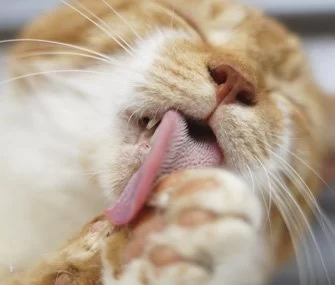
1- Introduction: Why Is Your Cat Licking or Chewing Its Paws?
As a cat owner, it’s natural to be concerned when you notice your cat licking or chewing its paws excessively. While occasional paw licking is normal for cats, constant chewing and licking can indicate underlying issues that require attention. In this article, we'll explore the common reasons for excessive paw licking or chewing in cats and what you can do about it. Understanding the root cause will help you ensure your cat's health and comfort.

2- Common Causes of Excessive Paw Licking and Chewing in Cats
There are several reasons why a cat might lick or chew its paws. These can range from minor irritations to more serious medical conditions. Here’s a breakdown of the most common causes:

2.1- Allergies
Allergies are one of the most common causes of excessive paw licking in cats. They may develop allergies to certain foods, environmental factors like pollen or dust mites, or chemicals in their grooming products. When a cat's paws become itchy due to an allergic reaction, they may lick or chew them in an attempt to relieve the discomfort. If you suspect allergies, a visit to your veterinarian can help identify the triggers and recommend treatments.
2.2- Fleas and Other Parasites
Fleas, ticks, and mites can cause itching and irritation that may lead to excessive licking or chewing. Flea infestations, in particular, are a common culprit, especially if your cat spends time outdoors. These parasites can make your cat’s paws itchy, prompting them to lick or chew at them. If you notice flea dirt (tiny black specks) on your cat’s fur, it’s essential to treat them for fleas right away.
2.3- Dry or Irritated Skin
Dry, flaky skin can cause your cat to lick and chew its paws excessively. This can be caused by cold weather, dehydration, or frequent bathing with harsh shampoos. Dry skin can lead to irritation, which your cat may try to soothe by licking. If your cat’s paws are dry or cracked, consider switching to a gentle, moisturizing shampoo or consulting your vet for hydrating treatments.
2.4- Pain or Injury
If your cat has injured its paw or has a foreign object stuck between its toes, it may lick or chew the area to alleviate pain or discomfort. This behavior may also be linked to sprains or other injuries that are not immediately visible. If your cat is limping or seems to be avoiding walking on a particular paw, it’s important to check for injuries or consult your veterinarian for a thorough examination.
2.5- Stress or Anxiety
Like humans, cats can experience stress or anxiety, which can lead to behavioral issues such as excessive licking. Stressful events like moving to a new home, changes in routine, or the addition of a new pet can make your cat more anxious, and they may start licking or chewing their paws as a coping mechanism. If you suspect stress, try to create a calm environment for your cat and consider providing enrichment activities to reduce anxiety.
3- What You Can Do If Your Cat is Licking or Chewing Its Paws
Once you’ve identified the cause of your cat’s paw licking or chewing, there are several steps you can take to help them. Here’s what to do:
3.1- Consult with Your Veterinarian
It’s always a good idea to consult with your veterinarian if your cat is exhibiting excessive paw licking or chewing. Your vet can conduct a thorough exam and help determine the underlying cause, whether it’s allergies, parasites, or something more serious. Early diagnosis and treatment can prevent the problem from worsening and improve your cat’s quality of life.
3.2- Manage Allergies and Irritations
If allergies or irritants are the cause, your veterinarian may recommend allergy medications, changes in diet, or specific treatments to soothe your cat’s skin. They may also suggest using hypoallergenic products, such as shampoos or flea treatments, to minimize exposure to allergens.
3.3- Address Parasites
For flea and parasite infestations, it’s essential to treat your cat with veterinarian-approved flea medications and preventatives. Make sure to clean your home thoroughly to eliminate any pests. Regular flea prevention will help protect your cat from future infestations.
3.4- Provide Comfort and Hydration
If your cat has dry or irritated skin, providing them with a comfortable, moist environment can help alleviate the issue. Make sure your cat has access to fresh water at all times and consider using humidifiers during dry months to help keep their skin hydrated.
4- Preventing Excessive Paw Licking and Chewing
While it’s important to address any issues contributing to your cat’s behavior, there are also steps you can take to prevent excessive paw licking in the first place:
4.1- Regular Grooming
Regular grooming can help prevent skin irritation and remove debris or parasites from your cat’s paws. Be sure to check their paws regularly for cuts, scratches, or foreign objects that might cause discomfort.
4.2- Stress Reduction Techniques
To reduce stress and anxiety, provide your cat with a calm and quiet environment. Use cat-friendly pheromone diffusers, offer interactive toys, and maintain a consistent routine to help keep your cat feeling secure and relaxed.
5- Conclusion: Addressing Paw Licking and Chewing
Excessive paw licking and chewing in cats can be caused by a variety of factors, from allergies and parasites to stress and injury. By closely observing your cat's behavior and seeking veterinary care when necessary, you can help address the issue and ensure your cat’s paws stay healthy and comfortable. If you're concerned about your cat's health, don't hesitate to reach out to the experts at Hidden Brook Veterinary for professional guidance and care.








