- why-cats-bite-food-dishes-or-objects
- possible-medical-causes-of-chewing-behavior
- behavioral-and-environmental-triggers
- real-case-luna-and-the-plastic-bowls
- how-to-respond-and-when-to-seek-help
- support-from-hidden-brook-veterinary
1. Why Cats Bite Food Dishes or Other Items
If you’ve noticed your cat biting at food dishes, water bowls, or even inedible household items, you’re not alone. While cats are naturally curious and sometimes playful, repetitive or aggressive chewing behavior may signal an underlying issue. Understanding the root cause is key to resolving the behavior without frustration or misinterpretation.
This kind of behavior may appear harmless or even amusing at first—but it often reflects deeper needs, instincts, or discomforts. It’s important to dig a little deeper to understand the “why.”

2. Possible Medical Causes of Chewing Behavior
2.1 Dental Issues
Cats may bite their food bowls or toys if they’re experiencing oral discomfort. Gingivitis, broken teeth, or ulcers can cause your cat to chew strangely to relieve pain. If your cat bites then recoils, or drools excessively, dental disease could be the culprit.

2.2 Nutritional Deficiencies
A lack of certain minerals or nutrients may lead to pica—where cats chew or eat non-food items. This can be especially true in cats with imbalanced diets or those recovering from illness. A vet evaluation can determine if your cat needs dietary adjustments.
2.3 Stress or Neurological Issues
Stress-induced behaviors can mimic obsessive-compulsive patterns. If your cat repetitively bites the same object, it could be due to anxiety, boredom, or a neurological trigger. Early intervention is critical to prevent escalation.
3. Behavioral and Environmental Triggers
3.1 Play and Attention-Seeking
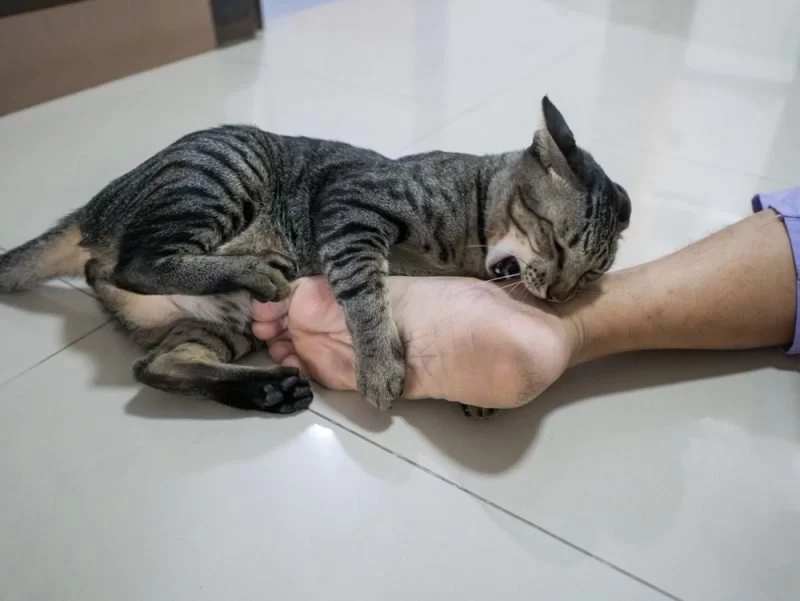
Young or high-energy cats may bite at dishes or other objects simply for fun or attention. If the object moves slightly (like a loose bowl), it can become a “prey-like” target. This is especially true in single-cat households where enrichment is lacking.
3.2 Texture and Material Fascination
Certain plastics or metals may retain odors or feel satisfying to chew. This behavior is often seen in cats drawn to specific materials like rubbery plastic or silicone. Replacing bowls with ceramic or stainless steel options can help discourage this.
3.3 Territory and Ownership
Some cats chew on food dishes to mark territory, especially if other animals are in the home. This is a behavioral cue tied to control and dominance rather than hunger or illness.
4. Real Case: Luna and the Plastic Bowls
Luna, a 2-year-old tabby in North Carolina, began chewing aggressively on her plastic water bowl. Her owner, Alicia, thought it was just a quirky habit. But when Luna started avoiding meals and gagging after drinking, she reached out to Hidden Brook Veterinary. The vet discovered small ulcers in Luna’s mouth likely caused by cheap plastic reacting to her saliva. Switching to a stainless steel bowl and treating the inflammation resolved the issue in days.
What seemed like a harmless habit was actually a warning sign—and thankfully, one caught in time.
5. How to Respond and When to Seek Help
Here’s what you can do if your cat is biting food dishes or other items:
- Switch to a high-quality, non-reactive bowl (ceramic or stainless steel)
- Observe for additional symptoms: drooling, weight loss, reduced appetite, etc.
- Offer more playtime and enrichment toys
- Try puzzle feeders to engage natural instincts and reduce boredom
If the behavior persists beyond a few days or escalates, it’s time to consult a vet. Bite behavior can mask bigger issues that require professional evaluation.
6. Support from Hidden Brook Veterinary
If you're ever uncertain about your cat’s behavior or suspect there’s more than meets the eye, the team at Hidden Brook Veterinary can help. They don’t just treat symptoms—they take time to understand what’s causing them. Whether it's dental health, behavioral triggers, or nutrition concerns, their compassionate approach ensures your cat receives personalized care backed by experience.
So the next time your feline friend starts gnawing on a food bowl, don’t just shrug it off—it may be your cat’s way of asking for help.