How to Teach Your Cat New Tricks: A Comprehensive Guide
As a cat owner, I’ve always been fascinated by the idea of teaching cats new tricks. While cats are often seen as independent creatures with their own personalities, they’re also highly intelligent and capable of learning a variety of tricks. Teaching your cat tricks not only helps stimulate their minds but also strengthens the bond between you and your feline friend. In this article, I’m going to share some of the best ways I’ve found to train a cat and teach them new tricks.

1730 Matthews Township Pkwy a1, Matthews, NC 28105, USA
See Details1. Understanding Your Cat's Personality and Behavior
Before diving into specific training techniques, it's essential to understand your cat's personality. Every cat is different. Some cats are highly social and love interacting with people, while others are more reserved and independent. Understanding your cat’s natural behavior will help you tailor your training methods accordingly. For example, a shy cat might require more patience and positive reinforcement to build trust, whereas an outgoing cat may be more eager to learn new tricks quickly.

1.1 Patience is Key
One of the first things I learned is that patience is crucial when teaching cats new tricks. Unlike dogs, cats may not always be as eager to please, so it’s important to be patient and consistent. Don't expect immediate results, and avoid getting frustrated if things don't go as planned. Cats respond better to positive reinforcement, so keep training sessions short and rewarding.
1.2 Setting Realistic Expectations
It's important to set realistic expectations when training your cat. While some cats may quickly learn tricks like sit or high-five, others might take longer. Start with simple tricks and gradually increase the difficulty level. Keep in mind that the training process should be fun for both of you, so make sure to go at your cat's pace and celebrate their progress along the way.
2. Essential Tools for Training Your Cat
Training a cat requires the right tools to make the process smoother and more enjoyable. Below are some essential items I’ve found helpful when training my cat:
2.1 Treats and Rewards
Treats are one of the most powerful tools in any cat’s training regimen. Whether it's their favorite snack or a special treat they rarely get, using food as a reward will motivate them to engage in training. Keep the treats small and easy to consume to avoid overwhelming your cat with large amounts of food. Over time, your cat will begin to associate good behavior with treats, making it easier to reinforce the desired actions.
2.2 Clicker Training
Clicker training is a popular method for training cats, and it’s something I’ve used successfully with my own cat. The clicker makes a distinct sound that lets your cat know they’ve done something right. After clicking, immediately offer a treat as a reward. This sound serves as a marker that your cat will start to associate with positive actions. Over time, you can use the clicker to train your cat to perform more complex tricks.
2.3 Cat Toys for Motivation
Cat toys can also be useful during training, especially for tricks that involve movement. For example, using a toy on a string or a laser pointer can help teach your cat to chase or follow commands. Interactive play not only keeps your cat engaged, but it also provides an outlet for their natural hunting instincts.
3. Teaching Your Cat the Basics: Simple Tricks to Start With
Now that we have the tools and mindset in place, let’s talk about the first tricks you can teach your cat. I recommend starting with simple behaviors that are easy for your cat to understand. Here are a few tricks that I’ve successfully taught my cats:
3.1 Sit
The "sit" command is one of the easiest tricks to teach your cat. To begin, hold a treat in front of your cat's nose, then slowly move it up and over their head. As their head follows the treat, their bottom will naturally lower into a sitting position. As soon as they sit, give them the treat and offer lots of praise. Practice this several times, and soon your cat will associate the action of sitting with the reward.
3.2 High Five
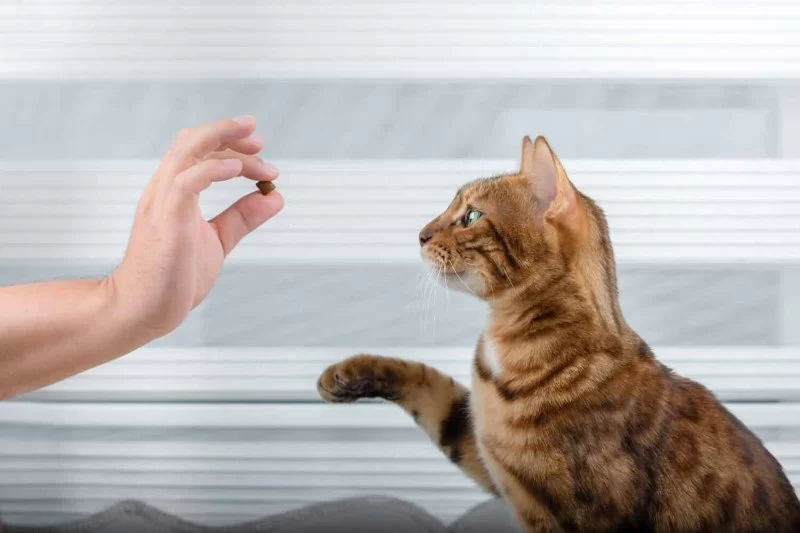
Once your cat has mastered the "sit" command, you can move on to the "high five." Start by holding a treat in your hand and letting your cat sniff it. Gently tap their paw with your hand while saying the word "high five." When they lift their paw, reward them with the treat and repeat the process. Over time, your cat will start to raise their paw on command to receive the reward.
3.3 Come When Called
Teaching your cat to come when called is a useful skill, especially when you want them to come inside after being outdoors. Start by calling your cat’s name in a happy and enthusiastic voice while showing them a treat. When they come to you, reward them immediately with praise and a treat. Repeat this process in different environments to reinforce the behavior.
4. Advanced Tricks for the Ambitious Cat Trainer
Once your cat has mastered the basics, you can move on to more advanced tricks. At this stage, patience and consistency are even more crucial, as these tricks will require more focus and practice. Here are a few advanced tricks that can be both fun and challenging to teach your cat:
4.1 Jumping Through a Hoop
This trick is a great way to engage your cat in some physical activity while teaching them a fun and impressive skill. Start by introducing your cat to the hoop and letting them explore it. Once they’re comfortable, gently encourage them to jump through the hoop by holding a treat on the other side. Gradually raise the height of the hoop and reward your cat each time they make the jump.
4.2 Fetch
Believe it or not, some cats can learn to fetch just like dogs! To teach this, start by tossing a toy a short distance and encouraging your cat to retrieve it. When they bring it back, reward them with a treat and praise. Keep practicing, and eventually, your cat may start fetching the toy on command.
5. Maintaining Consistency and Patience
Training your cat takes time, and it’s important to maintain consistency throughout the process. Make sure to practice regularly, but avoid overwhelming your cat with long training sessions. I’ve found that 5 to 10-minute sessions work best, with breaks in between. Always use positive reinforcement and keep the atmosphere fun and engaging for your cat.
In conclusion, teaching your cat new tricks can be a rewarding experience for both you and your feline friend. By using patience, positive reinforcement, and the right tools, you’ll be able to create a strong bond with your cat while keeping them mentally stimulated. Remember to keep training sessions short, fun, and rewarding, and always celebrate your cat’s progress!
For more training tips and resources, be sure to check out Hidden Brook Veterinary for expert advice and recommendations on pet care and training.