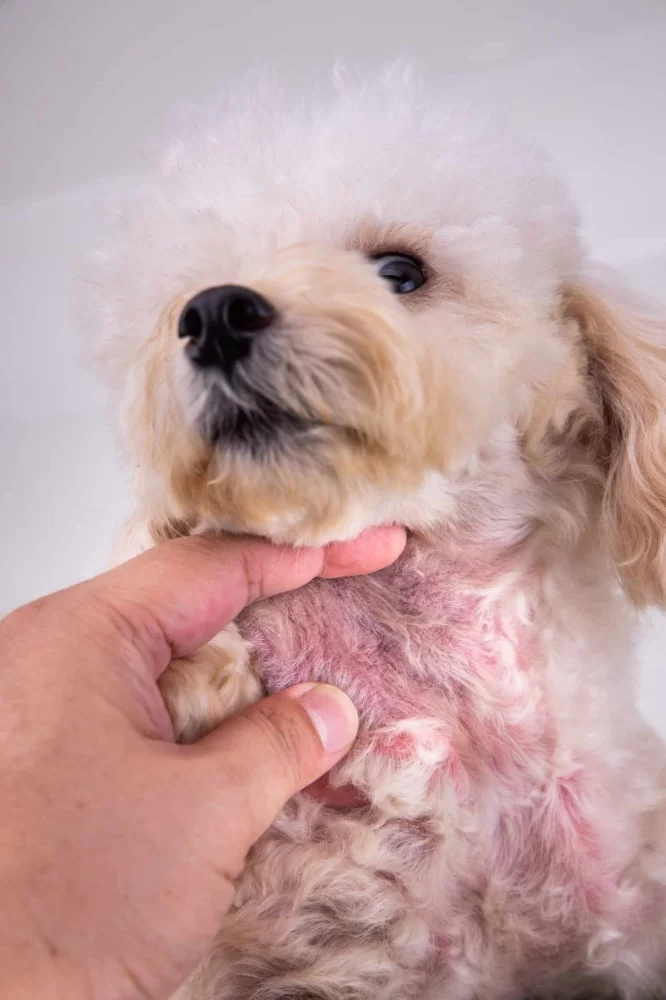
Common Skin Conditions in Dogs and How to Treat Them
- Common Skin Conditions in Dogs
- What Causes Skin Issues in Dogs?
- How to Treat Skin Conditions in Dogs
- When to See a Vet for Skin Problems
- Why Choose Hidden Brook Veterinary for Your Dog’s Skin Care
Common Skin Conditions in Dogs
Skin problems are one of the most common reasons pet owners seek veterinary care. Dogs can suffer from a variety of skin conditions that range from mild irritations to serious infections. These skin issues can cause your dog significant discomfort and even lead to more severe health problems if left untreated. Some of the most common skin conditions in dogs include:

1. Flea Allergic Dermatitis (FAD)
Flea allergies are a frequent cause of itching and discomfort in dogs. Flea saliva can trigger an allergic reaction, causing red, inflamed skin, hair loss, and constant scratching. FAD is one of the most common allergic skin conditions in dogs and requires prompt treatment to prevent secondary infections.

2. Hot Spots (Acute Moist Dermatitis)
Hot spots are painful, red, inflamed areas of skin that can develop quickly, often caused by excessive licking, scratching, or biting. These areas are moist and can become infected if not treated promptly. Dogs with thick coats, such as those with long hair or heavy undercoats, are more prone to developing hot spots.
3. Yeast Infections
Yeast infections in dogs often occur in the ears, paws, and skin folds. These infections are typically caused by an overgrowth of the yeast organism Malassezia. Symptoms of a yeast infection can include itching, redness, odor, and inflamed skin. Certain breeds, such as Cocker Spaniels and Dachshunds, are more prone to yeast infections.
4. Mange
Mange is a skin condition caused by mites that burrow into the skin, leading to irritation, hair loss, and itching. There are two main types of mange in dogs: demodectic mange, caused by the Demodex mite, and sarcoptic mange, caused by the Sarcoptes mite. Both types of mange can be highly contagious and require professional treatment.
5. Dermatitis
Dermatitis is a general term for inflammation of the skin. It can be caused by allergies, infections, parasites, or other underlying conditions. Dermatitis can lead to red, swollen skin, itching, and discomfort. It may affect specific areas or be widespread across your dog's body, depending on the cause.
What Causes Skin Issues in Dogs?
Skin issues in dogs can arise from a variety of factors, some of which are environmental, while others are related to internal health issues. Common causes include:
1. Allergies
Allergies are one of the most common causes of skin issues in dogs. They can be triggered by environmental factors (like pollen or dust mites), food ingredients (such as beef, chicken, or grains), or flea bites. Dogs with allergies often experience itchy skin, red rashes, and hair loss. Identifying and eliminating the trigger is key to treating allergy-induced skin conditions.
2. Parasites
Fleas, ticks, and mites are common parasites that can cause significant skin irritation and lead to conditions like flea allergy dermatitis and mange. These pests can also transmit diseases that affect your dog’s overall health, so it’s important to address any parasitic issues quickly.
3. Infections
Bacterial and fungal infections are common causes of skin issues in dogs. These infections can result from broken skin, moisture buildup, or underlying conditions that weaken your dog’s immune system. Dogs with compromised immune systems are more susceptible to developing infections that cause irritation and discomfort.
4. Hormonal Imbalances
Hormonal imbalances, such as hypothyroidism or Cushing’s disease, can lead to skin problems in dogs. These conditions affect the skin’s ability to maintain a healthy balance, leading to symptoms like hair loss, dry skin, and increased susceptibility to infections.
5. Poor Grooming and Hygiene
Inadequate grooming or poor hygiene can lead to skin conditions like matting, dirt buildup, and infections. Regular baths and brushing help keep your dog’s skin and coat clean and healthy. Proper grooming is especially important for dogs with long coats or those prone to developing skin problems.
How to Treat Skin Conditions in Dogs
The treatment for skin conditions in dogs varies depending on the underlying cause. Here are some general guidelines for managing common skin issues:
1. Flea Control
If fleas are the cause of your dog’s skin issues, the first step is to eliminate the fleas. Use veterinary-approved flea control products like topical treatments, collars, or oral medications. In addition, make sure to treat your dog’s living environment, including bedding and carpeting, to prevent re-infestation.
2. Topical Treatments
For hot spots, yeast infections, and minor dermatitis, topical treatments like medicated shampoos, creams, or sprays can help soothe the skin and reduce inflammation. Always follow your veterinarian’s instructions on how to apply these treatments and avoid using over-the-counter human products, as they may be harmful to dogs.
3. Antibiotics and Antifungals
If your dog has a bacterial or fungal infection, your vet may prescribe antibiotics or antifungal medications to treat the infection. These may be administered orally or topically, depending on the severity of the condition.
4. Allergies Management
If allergies are the cause of your dog’s skin issues, identifying the trigger is essential. Your veterinarian may recommend dietary changes, antihistamines, or immunotherapy (allergy shots) to help manage your dog’s allergic reactions. Avoiding known allergens, like specific foods or flea bites, is crucial for preventing flare-ups.
5. Regular Grooming
For dogs with chronic skin issues, regular grooming and baths with specialized shampoos are essential. Keeping your dog’s coat clean and free of mats can help prevent the development of skin conditions. Make sure to consult your vet about the best grooming products for your dog’s specific needs.
When to See a Vet for Skin Problems
While mild skin irritations can often be managed at home, there are times when it’s essential to seek veterinary care. If your dog is experiencing any of the following, it’s important to see a vet:
- Persistent or worsening symptoms
- Signs of infection, such as pus, foul odor, or increased redness
- Hair loss or bald patches
- Severe itching or discomfort
- Open wounds or sores
Timely treatment can prevent more serious health issues and ensure your dog’s skin heals properly.
Why Choose Hidden Brook Veterinary for Your Dog’s Skin Care
At Hidden Brook Veterinary, we specialize in treating a wide variety of skin conditions in dogs. Our experienced team is here to provide comprehensive care, from diagnosis to treatment, for your dog’s skin health. Whether your dog is dealing with fleas, infections, or allergies, we offer personalized solutions to ensure your pet is comfortable and healthy.
If you’re concerned about your dog’s skin condition, visit us at Hidden Brook Veterinary. We’re committed to helping your pet feel their best, inside and out.