- why-cat-licking-paws-excessively-happens
- common-underlying-triggers
- how-to-identify-if-it-is-a-problem
- real-life-case-studies-of-excessive-paw-licking
- treatment-and-care-options
- support-from-hidden-brook-veterinary
1. Why “Cat Licking Paws Excessively” Happens
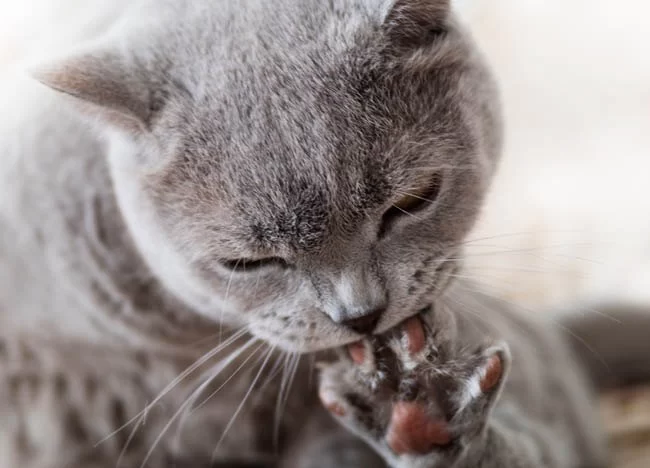
Cats are notoriously clean animals, often seen grooming themselves meticulously. However, when your cat starts licking its paws excessively, this behavior might indicate more than just routine grooming. It can be a symptom of underlying physical or psychological issues that need attention.
Whether it’s occasional or persistent, understanding why your cat is focusing so intensely on their paws can help prevent minor irritations from developing into serious health concerns.
2. Common Underlying Triggers
Excessive paw licking is not a condition in itself, but rather a response to discomfort, irritation, or emotional distress. Here are some of the most common triggers:

2.1 Allergies and Irritants
Environmental allergens such as pollen, dust, mold, or even cleaning chemicals on floors can irritate your cat’s skin. Food allergies are also a common culprit. These reactions often lead to itching and inflammation in the paws, prompting excessive licking as a soothing response.
2.2 Skin Infections or Parasites
Bacterial or fungal infections, including ringworm, can cause intense itching and lead to obsessive grooming behaviors. Fleas or mites might not always be visible but can cause localized itching on the feet and between toes.
2.3 Behavioral Disorders and Stress
Cats express anxiety and boredom in various ways. One of the more subtle signs is repetitive grooming, including paw licking. Major changes like moving homes, introducing new pets, or long periods of solitude can trigger this behavior.
2.4 Injuries and Foreign Objects
A thorn, splinter, or small cut can make your cat zero in on a particular paw. Even if the wound seems minor, cats may continue licking until it becomes worse, potentially leading to infection.
3. How to Identify If It Is a Problem
Not every instance of paw licking should cause concern. However, the frequency, intensity, and context of the behavior offer important clues.
3.1 Duration and Persistence
If your cat is licking one or both paws multiple times an hour, every day, that’s more than just grooming. Keep a simple log of how often this happens—it can help your veterinarian assess the situation more clearly.
3.2 Physical Signs to Watch
Look for redness, swelling, bald patches, scabs, or a foul odor around the paws. These signs suggest something beyond routine grooming and may require medical attention.
3.3 Behavioral Changes
Is your cat less playful? Hiding more than usual? Eating less? When paw licking comes with broader behavior changes, it's time to dig deeper.
4. Real-Life Case Studies of Excessive Paw Licking
4.1 “Nico” and the Mysterious Food Allergy
Nico, a four-year-old British Shorthair, began licking her front paws day and night. Her owner initially thought it was due to her meticulous nature, but the behavior escalated. A food trial conducted at Hidden Brook Veterinary revealed a chicken allergy. Once her diet was adjusted, the paw licking stopped almost entirely within two weeks.
4.2 “Milo” and the Hardwood Floor Cleaner
After a recent deep cleaning of their apartment, Milo’s owner noticed he began obsessively licking his paws. Investigation revealed a residue from the cleaning solution remained on the hardwood floors. Switching to a pet-safe cleaner and wiping the floors regularly resolved Milo’s symptoms.
4.3 “Sasha” and Emotional Distress
Sasha, a 10-year-old tabby, developed excessive paw licking following the loss of another household pet. She displayed signs of grief and anxiety, including lethargy and appetite loss. Behavioral therapy and anti-anxiety supplements prescribed by the team at Hidden Brook Veterinary helped her recover over time.
5. Treatment and Care Options
Helping your cat overcome paw licking behavior requires understanding the root cause. Here’s how veterinarians generally approach it:
5.1 Diagnostic Testing
Skin scrapings, fungal cultures, and allergy testing help rule out infections or allergic responses. In some cases, dietary elimination trials are necessary to identify food sensitivities.
5.2 Medication and Supplements
Depending on the cause, treatment may include antifungals, antibiotics, antihistamines, or calming supplements. In behavior-driven cases, pheromone diffusers and anxiety-reducing treatments may be recommended.
5.3 Environmental Adjustments
Switching to hypoallergenic products, using pet-safe cleaners, or providing more stimulation can go a long way. Creating a calm environment also reduces compulsive behaviors.
5.4 Ongoing Monitoring
Consistent check-ins with your veterinarian ensure your cat's symptoms are improving and helps adjust treatments as needed.
6. Support from Hidden Brook Veterinary
If your cat is licking its paws excessively and you’re not sure where to turn, our team at Hidden Brook Veterinary is here to help. We provide comprehensive diagnostics, from allergy panels to behavioral assessments, ensuring your cat gets a tailored care plan that actually works.
With our gentle approach and experienced staff, we can help uncover what’s really behind your cat’s paw-licking behavior and offer effective, long-term solutions. Whether it’s a skin issue or something emotional, we’re committed to helping your feline companion feel better—fast.