As a cat owner, I’ve often wondered why my feline companions seem to gravitate toward small, cozy spaces rather than sprawling out in larger open areas. Over the years, I’ve observed my cats squeezing into small boxes, hiding under furniture, and curling up in corners, making it clear that they find comfort in these confined areas. But why do cats love small play areas so much? After a bit of research and observing my own pets, I’ve come to understand that their preference for smaller spaces is linked to their instincts, comfort, and safety. In this article, I’ll explore why cats love small play areas, how to create these spaces, and the benefits they offer to your cat’s overall well-being.
- Cats and Their Natural Instincts for Small Spaces
- How to Create the Perfect Small Play Area for Your Cat
- The Benefits of Small Play Areas for Cats
- Real-Life Example: My Cat's Favorite Small Space
- Cat Care Tips: Enhancing Comfort in Small Play Areas
1. Cats and Their Natural Instincts for Small Spaces
Cats are natural hunters, and this instinct plays a significant role in their love for small, enclosed spaces. In the wild, cats often seek out tight, hidden spots to rest or sleep in, where they can feel safe and secure from predators. These small, confined areas offer a sense of protection, which helps cats feel more comfortable and less vulnerable. I’ve noticed this behavior in my own cats—they tend to hide in small corners or inside boxes, which are the perfect mini-havens for them to relax and observe their surroundings from a safe vantage point.
Another reason cats love small spaces is that they provide a sense of territorial control. Cats are territorial animals, and small play areas allow them to claim their space, making it feel like their own safe domain. When I set up small areas for my cats, like cozy beds or play zones, they often mark these spaces with scent glands around their face, further reinforcing their sense of ownership.

2. How to Create the Perfect Small Play Area for Your Cat
If you’ve ever wondered how to create a play area that your cat will love, I have a few tips based on my own experience. Here’s how you can design small, cozy spaces that your cat will enjoy:
- Use Cat-Friendly Furniture: Invest in furniture designed for cats, such as cat trees, small shelves, or cat tunnels. These allow your cat to climb, jump, and play in confined spaces, mimicking the natural environments they love. My cats adore climbing through their cat tree, which has small platforms where they can jump and hide.
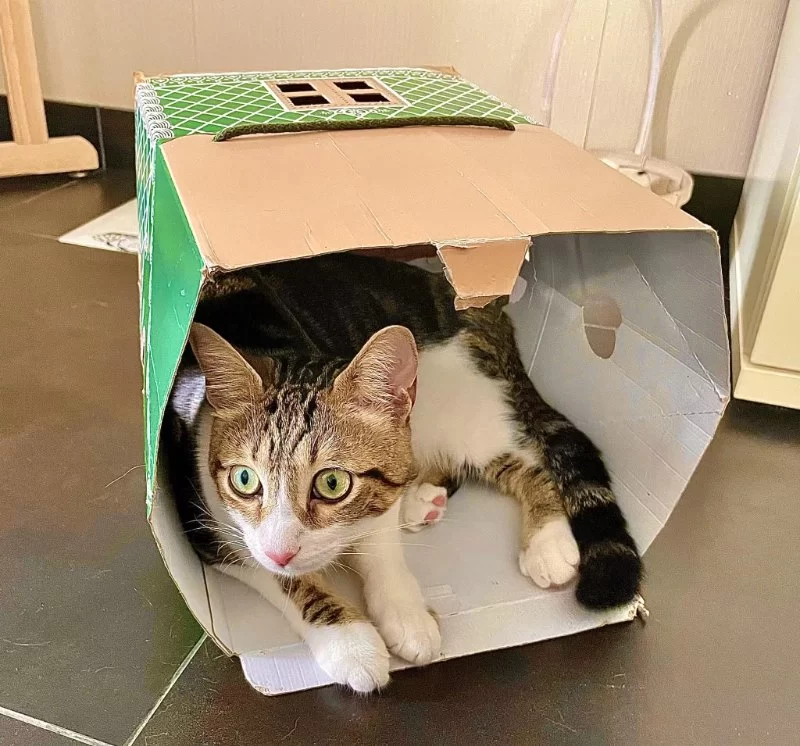
- Create Hideaways: Small boxes, soft beds, and hideaway huts are perfect for giving your cat the cozy, enclosed space they seek. I found that placing a few boxes around the house, particularly near windows, makes my cats feel comfortable and safe, giving them a place to retreat and observe the outside world.
- Provide Vertical Space: Cats love to explore different heights. Installing cat shelves or placing perches in high places offers them a feeling of security while giving them the chance to jump and climb. My cats spend a lot of time perched on shelves, watching everything from above, where they feel they can control their environment.
3. The Benefits of Small Play Areas for Cats
Small play areas are not just a source of enjoyment for your cat—they also offer several key benefits. Here’s why creating these spaces is essential for your cat’s well-being:
- Stress Reduction: Small, quiet spaces provide cats with a sense of security, helping them feel less stressed. Cats often retreat to these areas when they need a break from the hustle and bustle of the household. I’ve observed that my cats seem to be calmer and more relaxed after spending time in their small, cozy corners.
- Enhanced Mental Stimulation: Small spaces encourage cats to explore, play, and use their problem-solving skills. By providing a variety of hideaways, tunnels, and climbing structures, you’ll be keeping your cat mentally stimulated, which is essential for preventing boredom and anxiety.
- Improved Physical Health: Cats enjoy jumping, climbing, and playing in confined areas. This activity helps maintain their physical health by encouraging exercise. I’ve seen my cats become more agile and fit as they play in their small spaces, especially with interactive toys that encourage jumping and climbing.
4. Real-Life Example: My Cat's Favorite Small Space
One of my cats, Whiskers, is especially fond of her small play area. She has a cozy box by the window where she likes to curl up and nap during the day. Whenever there’s too much noise or activity, she retreats to her box for comfort and peace. Interestingly, she also loves exploring small, hidden nooks around the house, especially areas where she can sit in the corner and keep a watchful eye on everything. Over the years, I’ve learned that providing these small, designated spaces for my cats has made them feel safe and content in their environment.

5. Cat Care Tips: Enhancing Comfort in Small Play Areas
To maximize the comfort and enjoyment of your cat’s small play area, here are some additional tips that I’ve found helpful:
- Maintain Cleanliness: Keep the play areas clean by regularly washing cat beds, blankets, and toys. This helps maintain a fresh environment for your cat.
- Comfortable Bedding: Make sure the bedding in your cat’s small play area is soft and comfortable. Cats love to curl up in cozy spots, so providing plush cushions or soft mats will make the area more inviting.
- Interactive Toys: Add a variety of interactive toys, such as feather wands or laser pointers, to keep your cat engaged in their small space. These toys offer physical and mental stimulation, encouraging healthy playtime.
If you’re looking for more cat care tips or want to create the perfect play area for your feline companion, visit Hidden Brook Veterinary for expert advice and products that can help improve your cat’s well-being.