The Best Ways to Teach Your Cat New Tricks
- 1. Why Teaching Your Cat New Tricks Is Important
- 2. Preparing for Cat Training
- 3. Basic Training Techniques
- 4. Advanced Tricks to Teach Your Cat
- 5. Troubleshooting Common Training Challenges
- 6. How to Make Training Fun and Rewarding
1. Why Teaching Your Cat New Tricks Is Important
Training your cat is a rewarding experience for both you and your feline friend. Not only does it improve your cat’s behavior, but it also strengthens the bond between you two. Teaching your cat new tricks can make them more engaged and mentally stimulated, preventing boredom and destructive behavior. Additionally, it’s an excellent way to keep your cat physically active and mentally sharp as they learn new commands.
While dogs are often the focus of trick training, cats can also be trained to perform a variety of tasks and tricks. Many pet owners are surprised to learn that their cats are highly capable of learning and responding to commands. With the right approach, patience, and positive reinforcement, you can teach your cat to perform tricks just like a dog!
2. Preparing for Cat Training
Before you start teaching your cat tricks, there are a few preparations you need to make to ensure successful training sessions. The first step is creating a calm and quiet environment where your cat can focus on the task at hand. Choose a room or area that is free from distractions so your cat can concentrate.
Next, make sure you have the right tools for training. Positive reinforcement is key when training cats, so treat your cat with their favorite treats or snacks. Clickers can also be useful for reinforcing good behavior and marking successful attempts. A clicker makes a distinct sound, which helps the cat associate the sound with a positive action.
3. Basic Training Techniques
When starting out with cat training, it’s important to begin with simple commands and tricks that your cat can easily learn. Here are a few basic techniques that will help you teach your cat:
3.1 Start with a Simple Command
One of the easiest tricks to teach your cat is to respond to their name. Start by saying their name and rewarding them with a treat when they respond. This can be a great way to get your cat's attention and build the foundation for other tricks.
3.2 Use Positive Reinforcement
Positive reinforcement involves rewarding your cat when they perform the desired action. This could include giving them a treat, petting them, or offering praise. It’s important to reward your cat immediately after they do the right thing so they can associate the reward with the action.
3.3 Keep Sessions Short and Fun
Cats have short attention spans, so keep training sessions brief—about 5 to 10 minutes at a time. This will prevent your cat from becoming frustrated or bored. Make the sessions fun by incorporating toys, treats, and even playtime. The more enjoyable the training is, the more likely your cat will want to participate.
4. Advanced Tricks to Teach Your Cat
Once your cat has mastered basic commands, you can move on to more advanced tricks. Here are a few ideas:
4.1 Sit
The “sit” command is one of the simplest and most effective tricks to teach your cat. Hold a treat above their head, and when they look up, their bottom should naturally lower to the ground. Once they sit, immediately reward them with a treat and praise.
4.2 High-Five
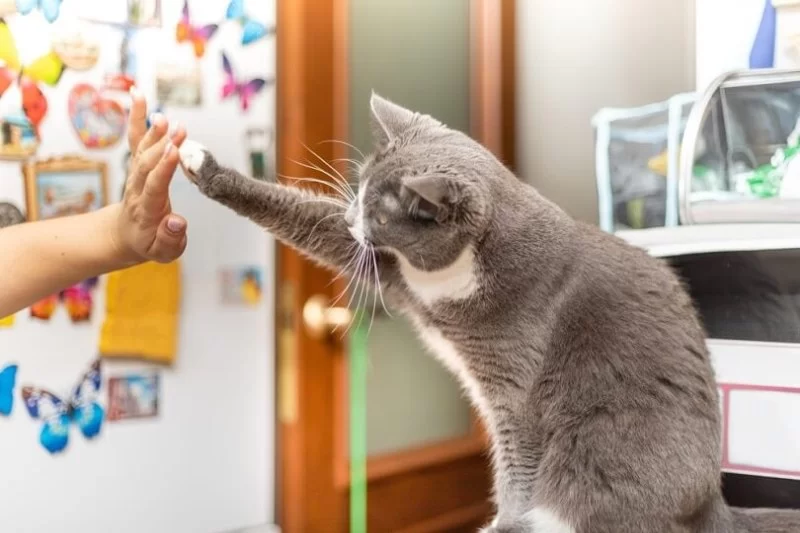
Teaching your cat to give a high-five can be a fun and interactive trick. Hold a treat in your hand and encourage your cat to touch it with their paw. As soon as they make contact, reward them with a treat and praise. Repeat this until your cat gets the hang of it.
4.3 Roll Over
Rolling over can be a bit more challenging, but with patience, it’s achievable. Gently guide your cat to roll over while holding a treat near their nose. As they roll to follow the treat, reward them with praise and a treat once they complete the action.
5. Troubleshooting Common Training Challenges
Cat training isn’t always a smooth process, and you may encounter challenges along the way. Here are some common issues and solutions:
5.1 Your Cat Isn’t Interested
If your cat isn’t showing interest in training, try using a different type of treat or toy. Some cats prefer dry treats, while others may be more motivated by wet food or their favorite snack. Also, ensure the training environment is calm and quiet to avoid distractions.
5.2 Your Cat Is Easily Distracted
If your cat keeps getting distracted, try breaking the training into smaller, more manageable steps. Shorter training sessions and fewer distractions can help your cat focus on the task at hand.
5.3 Your Cat Won’t Follow Through
If your cat seems to forget the trick after a few tries, don’t get discouraged. Cats are independent creatures, and some may take longer to learn than others. Keep practicing, and remember that patience is key.
6. How to Make Training Fun and Rewarding
To keep your cat engaged and motivated throughout the training process, make sure that training sessions are always fun. Use interactive toys, such as feather wands, to grab your cat’s attention. You can also incorporate games into training sessions to make them feel like playtime.
Another great way to keep your cat motivated is by changing up the rewards. Instead of always offering treats, mix in some praise, petting, or extra playtime to keep things fresh and exciting for your cat.
At the end of the day, teaching your cat new tricks is about building a positive and enjoyable relationship. The more you practice, the better your cat will get at following commands and performing tricks. So, start small, keep it fun, and watch your cat become a pro at new tricks!
If you're looking for expert advice or products to help with your cat's behavior and training, visit Hidden Brook Veterinary for the best recommendations and services tailored to your pet’s needs.