
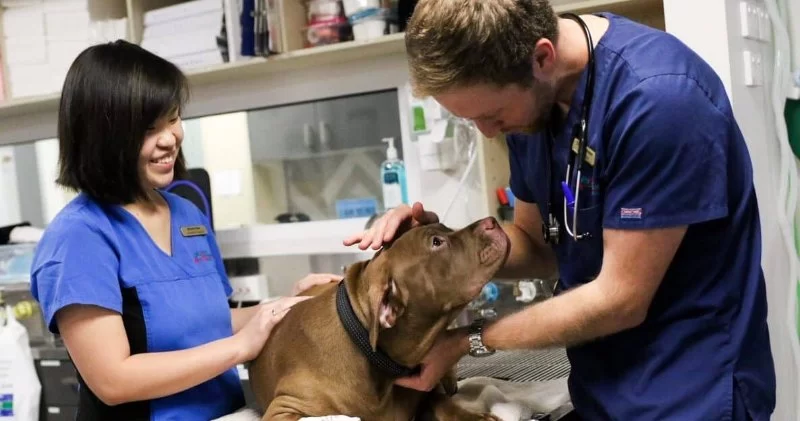
What Is the Education and Training for a Veterinarian? A Complete Guide
- pre-veterinary-education-basics - Pre-veterinary education: what comes before vet school
- vet-school-admission-and-selection - Getting into vet school: what it takes to be selected
- inside-the-vet-school-curriculum - Inside the vet school curriculum: what students really study
- clinical-training-and-hands-on-experience - Clinical training and real-world experience
- licensing-and-specialization - Licensing, internships, and veterinary specializations
- real-stories-from-vet-graduates - Real stories from vet students and graduates
- starting-your-journey-in-veterinary-medicine - Starting your journey: what to do next if you want to become a vet
1. Pre-veterinary education: what comes before vet school
Before someone can call themselves a veterinarian, they must lay the academic foundation—and that starts in college. A common misconception is that veterinary schools require a specific “pre-vet” degree. In reality, students can major in biology, animal science, chemistry, or any related field—as long as they complete the core prerequisites such as organic chemistry, biology, physics, and animal nutrition.
The journey toward veterinary training begins early, often with animal volunteering, shadowing veterinarians, or working as vet techs. These experiences are as critical as grades when it comes to vet school applications.

2. Getting into vet school: what it takes to be selected
2.1 Competitive admissions process
Admission to veterinary school is highly competitive. In the U.S., fewer than 35 accredited vet schools serve thousands of hopeful applicants each year. GPA, GRE scores (where required), and strong letters of recommendation are essential—but so is experience working with animals and in clinical settings.

2.2 Building your portfolio
Successful applicants often have hundreds of logged hours working with veterinarians, exposure to both small and large animals, and demonstrated leadership through clubs or research. Veterinary school admission isn’t just about intelligence—it’s about commitment.
3. Inside the vet school curriculum: what students really study
3.1 Four rigorous years of training
Veterinary school typically lasts four years. The first two focus heavily on classroom-based scientific learning—anatomy, pathology, pharmacology, microbiology, and physiology. Students dissect cadavers, learn disease diagnostics, and begin lab work that mimics real-life cases.
3.2 Learning across species
Unlike human medicine, veterinary education covers multiple species. Students learn how to treat dogs, cats, horses, cows, birds, and sometimes exotic animals. Each species has its own anatomy and pharmacological needs, which makes the vet school curriculum uniquely intense.
4. Clinical training and real-world experience
4.1 Clinical rotations in year three and four
The final years of veterinary education are largely hands-on. Students rotate through various departments—surgery, internal medicine, oncology, emergency care, and more. They interact directly with pet owners, assist in surgeries, and respond to real emergencies under supervision.
4.2 What hands-on training looks like
This phase of veterinary training is when theory meets practice. Vet students learn to read X-rays, perform exams, manage anesthesia, and develop treatment plans. It’s not uncommon for students to work 12-hour shifts in teaching hospitals.
5. Licensing, internships, and veterinary specializations
5.1 The NAVLE and state licensure
After graduation, students must pass the NAVLE (North American Veterinary Licensing Examination). Without this, they can’t legally practice. Some states have additional requirements like jurisprudence exams on veterinary law.
5.2 Optional internships and residencies
Graduates can start general practice immediately, but many pursue internships to gain specialized experience. From there, residencies in fields like cardiology, neurology, or exotic animal care lead to board certification. Becoming a specialist can take 3–5 additional years.
6. Real stories from vet students and graduates
Sarah, now a practicing vet in Seattle, recalls her fourth-year rotation in emergency medicine. “It was overwhelming—but the moment I helped save a dog from shock after a car accident, I knew I was exactly where I was meant to be.”
Jake, a large animal vet in Montana, said, “Vet school wasn’t just science. It was learning how to listen to ranchers, how to stitch a laceration in the middle of a snowstorm, how to stay calm when things go wrong. No textbook teaches that. The training for a veterinarian is life preparation.”
7. Starting your journey: what to do next if you want to become a vet
7.1 Begin with experience
If you're considering veterinary medicine, start by volunteering at a local animal clinic or shelter. Hands-on experience will help you determine if this path fits your passion and stamina. Shadowing a veterinarian can open your eyes to the realities—and rewards—of the profession.
7.2 Explore your academic options
Look into schools with strong pre-vet programs and meet with academic advisors early. Keeping a high GPA and logging clinical hours should be part of your high school and college strategy.
7.3 Take your next step with confidence
Understanding what the education and training for a veterinarian truly involves gives you a realistic—and inspiring—view of the path ahead. If you’re ready to begin this journey, explore opportunities that prepare you for the road to vet school. Passion paired with preparation can lead to a career that changes lives—both animal and human.








