- 1 - Why Basic Commands Matter for Every Dog Owner
- 2 - Teaching Your Dog to Sit
- 3 - Training the Stay Command
- 4 - Mastering the Come Command
- 5 - Real-Life Stories of Training Success
- 6 - Long-Term Training and Consistency
1. Why Basic Commands Matter for Every Dog Owner
Teaching your dog basic commands such as sit, stay, and come is more than a fun trick—it’s about safety, bonding, and communication. These commands help create structure, prevent unwanted behaviors, and ensure your dog can respond in situations that could otherwise be risky, like running toward traffic or greeting visitors at the door. Trainers often emphasize that consistency and patience are key, as each dog learns at its own pace. Owners who invest time in these foundational skills usually find their dogs more relaxed, confident, and responsive in everyday life.

1008 W Hazelwood Dr, Urbana, IL 61802, USA
See Details2. Teaching Your Dog to Sit
The “sit” command is often the first step in obedience training because it is simple yet powerful. To begin, hold a treat close to your dog’s nose and slowly move it upward. Naturally, your dog will sit as they follow the treat. The moment their bottom touches the ground, reward them with the treat and verbal praise. Repeat this process several times until the action becomes natural. Over time, you can remove the treat and rely on verbal cues alone.
At Hidden Brook Veterinary, experts highlight that the sit command can also help manage overexcitement. For example, teaching your puppy to sit before greeting guests creates a calm and polite habit that lasts into adulthood.

3. Training the Stay Command
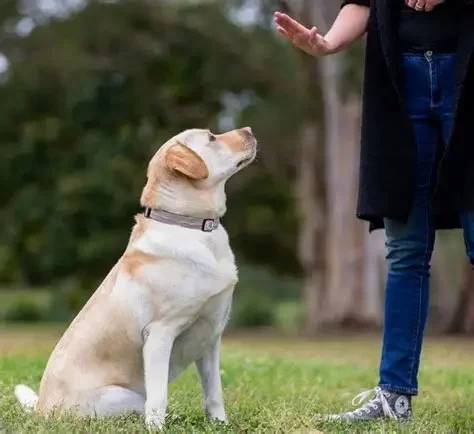
Once your dog has mastered sit, “stay” is the logical next step. Start with your dog in the sitting position. Hold your hand out, palm facing your dog, and say “stay” in a calm, firm tone. Take one step back, then return quickly to reward your dog if they remain seated. Gradually increase the distance and duration of the stay as your dog improves.
Patience is essential—some dogs may want to follow immediately. In these cases, keeping early sessions short helps prevent frustration. Trainers also recommend choosing a quiet environment free from distractions during the first stages of learning.
4. Mastering the Come Command
The “come” command is vital for safety, especially outdoors. Start in a controlled environment, such as your backyard. Crouch down, call your dog’s name, and say “come” with an enthusiastic tone. Use rewards, like treats or favorite toys, to encourage them to return to you. Always praise generously when they respond correctly, even if it takes a while. Over time, you can add mild distractions to reinforce the command in more real-life situations.
This command is particularly important in emergencies—if your dog accidentally slips off the leash, a reliable recall can prevent dangerous scenarios.
5. Real-Life Stories of Training Success
One dog owner in California shared how teaching the “come” command saved her Labrador from running into a busy road. By practicing short recall exercises daily in her backyard, the dog quickly learned to respond even when distracted. Another family used the sit and stay commands to calm their energetic puppy during dinner time, turning what used to be a chaotic routine into a peaceful one.
These stories highlight how investing time in training creates harmony at home while ensuring safety in unpredictable environments.
6. Long-Term Training and Consistency
While teaching sit, stay, and come forms a strong foundation, maintaining these commands requires consistency. Owners should reinforce them in daily routines—before meals, during walks, and when greeting guests. Short, frequent training sessions work better than long, irregular ones. Experts also suggest keeping training fun by mixing in playtime and praise, preventing boredom or frustration.
Long-term success also depends on adjusting techniques to your dog’s personality. Some dogs respond better to verbal praise, while others are more motivated by food or toys. Understanding your dog’s preferences ensures training remains effective and enjoyable.
When approached with patience, positive reinforcement, and professional guidance, these three simple commands can transform the relationship between dog and owner, creating trust and mutual respect that lasts a lifetime.